
That Pain in Your Shoulder? Why the Real Culprit Might Be Your Upper Back
- Pretty Skin Esthetics & Wellness
- 2 days ago
- 4 min read


You feel a persistent, deep ache right at the top of your shoulder blade. Your automatic instinct is to rub it, press a lacrosse ball into it, or ask someone to squeeze your shoulder as hard as they can. It might feel good for a fleeting few seconds, but within ten minutes, that familiar, throbbing ache is right back.
Why? Because where you feel the pain isn't actually where the problem is.
In clinical bodywork, this frustrating phenomenon is known as referred pain. A hyper-contracted cluster of muscle fibers—a trigger point—in one area of your body can send an emergency electrical signal along shared nerve pathways, causing you to feel pain somewhere else entirely.
If you’ve been chasing a stubborn shoulder ache with zero lasting results, you are treating the symptom instead of the source. Here is the neurological science behind referred pain, and how targeted therapeutic massage finds and fixes the real culprit hiding in your upper back.
The Geography of Referred Pain
To understand why your upper back is causing your shoulder pain, we have to look at how your nervous system maps your body.
Your brain doesn’t have individual, direct wires to every single millimeter of muscle fiber. Instead, multiple muscles share the same major nerve pathways running down from your spine. When a muscle in your upper back undergoes severe stress, the nerve pathways become crowded with pain signals. Your brain can easily misinterpret exactly where those signals are coming from.
The Infraspinatus Trap
The most common culprit behind mysterious shoulder pain is a deep, flat muscle that sits flat on your shoulder blade called the infraspinatus, along with its neighbors, the rhomboids (the muscles between your spine and shoulder blade).
When these upper back muscles get chronically overworked—usually from driving, typing, or rounding your shoulders forward—they develop dense, painful trigger points. Because of shared nerve channels, the pain signals travel outwards, manifesting as a sharp ache right in the front or top of your shoulder joint. You could massage your shoulder joint until you are blue in the face, but until those upper back muscles let go, the shoulder will keep throbbing.
Part 2: Active vs. Latent Culprits
During a therapeutic massage session, a clinical therapist doesn't just ask where it hurts; they look for the silent instigators. Trigger points are categorized into two types:
Active Trigger Points: These hurt constantly, even at rest. The ache you feel in your shoulder is an example of an active symptom.
Latent Trigger Points: These are completely silent until a therapist presses on them. You might not even realize your upper back is tight until a therapist applies pressure to a specific spot near your spine, and you instantly feel a reproduction of the pain shooting directly into your shoulder.
Finding these latent points is the "aha!" moment of clinical bodywork. It proves that your body is operating as a web of compensation, rather than isolated parts.
How Therapeutic Massage Solves the Mystery
Trying to smash a painful shoulder joint with brute force or heavy massage guns can actually irritate the joint capsule and make the inflammation worse. A specialized therapeutic approach uses targeted, anatomy-driven pressure to dismantle the true source of the pain.
Targeted Ischemic Compression
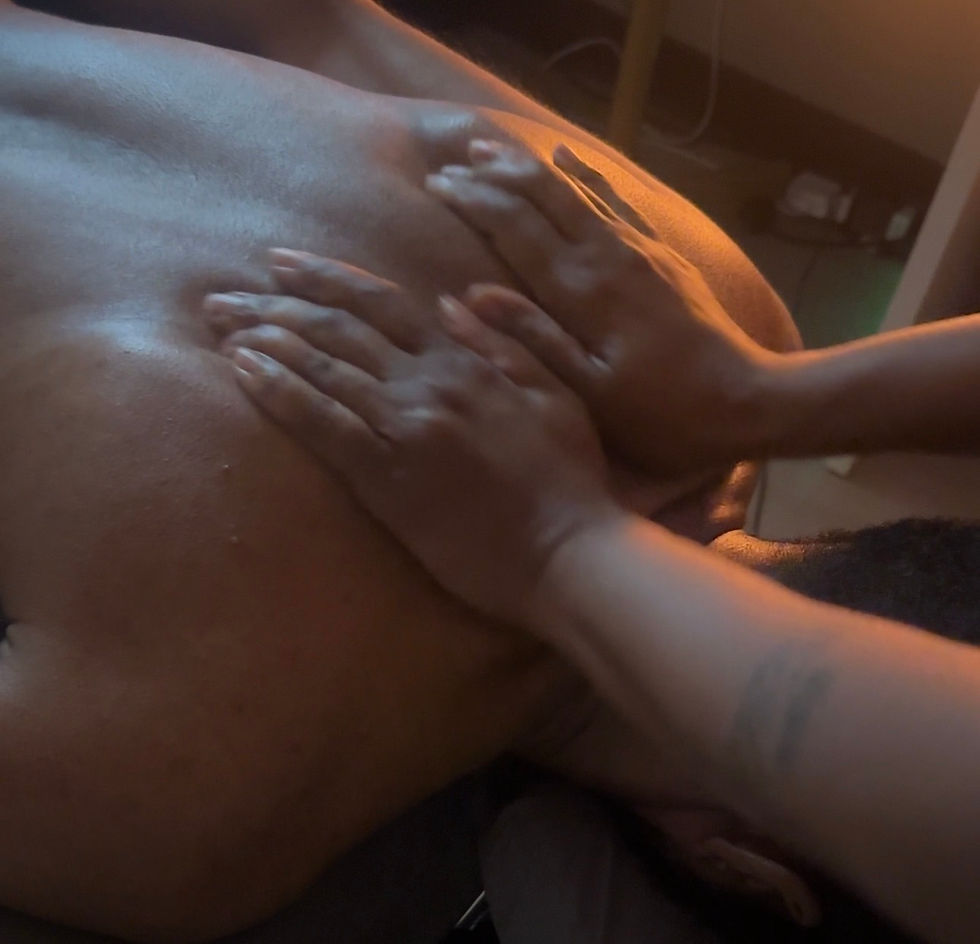
Once your therapist traces the pain back to the culprit muscle in your upper back, they apply precise, sustained static pressure directly to the trigger point.
While this can feel intense, it serves a brilliant physiological purpose. It temporarily restricts the stagnant, low-oxygen blood flow trapped inside the knot. When the therapist releases the pressure after 10 to 30 seconds, a rush of fresh, highly oxygenated blood floods the muscle tissue. This instantly flushes out acidic metabolic waste and stops the nerve pathways from firing those erratic shoulder pain signals.
Neuromuscular Re-education
By manually manipulating the hyper-contracted tissue in your back, therapeutic massage sends a message to your central nervous system to drop its guard. It resets the resting length of the muscle filaments, breaking the mechanical spasm and allowing your shoulder blade to move freely without pulling on the shoulder joint.
Breaking the Daily Habit
If your upper back is constantly referring pain to your shoulder, it’s usually due to a repetitive postural habit. The most common cause is muscular fatigue from desk work. When you sit with your arms extended forward to type for hours, your upper back muscles are forced to act like an anchor, holding up the weight of your arms and head against gravity. Eventually, they give up and lock down into a spasm.
A therapeutic massage therapist won't just unlock the tissue; they will help you identify these daily patterns so you can make simple adjustments to your desk layout, driving position, or sleeping posture to keep the pain from coming back.
Stop Chasing the Pain. Fix the Source.If you are tired of rubbing your shoulder with zero lasting relief, it’s time to stop treating the symptom. Let’s find the real culprit hiding in your upper back and shut down the pain signals at the root.



Comments