
Breaking the Bind: How Massage Smooths Out Internal Scar Tissue and Adhesions
- Pretty Skin Esthetics & Wellness
- 20 hours ago
- 3 min read


When you get a cut on your skin, you can watch the healing process happen in real time. A visible scar forms, hardens, and eventually fades. But what many people don't realize is that your body uses that exact same cellular "glue" to repair deep internal damage to your muscles, ligaments, and tendons.
Whether you are recovering from a major surgery, an old sports injury, or years of poor micro-posture at a desk, your body lays down internal scar tissue.
In the clinical world, when these internal scars bind layers of healthy muscle tissue together, we call them adhesions.
If a specific part of your body feels permanently glued shut, stiff, or cold—no matter how much you stretch—you aren't just dealing with tight muscles. You are dealing with structural blockages. Here is the physical science behind how internal adhesions bind your body, and how specialized therapeutic massage breaks them apart to restore your fluid movement.
How Internal "Glue" Locks Down Your Movement
To understand an adhesion, think of your muscle layers like pages in a brand-new book. For you to move smoothly and without pain, those pages need to slide past each other seamlessly.
When a muscle fiber experiences a micro-tear (from heavy lifting, sudden trauma, or chronic friction), your body rushes to fix it by dumping a web of random collagen fibers over the tear. Think of it like pouring hot superglue over those pages to patch a rip.
The patch works, but now those individual muscle pages are permanently stuck together. This creates a physiological cascade:
Restricted Glide: When you try to move, the glued muscle layers pull on each other abnormally, causing a sharp or pulling pain.
Ischemic Zones: Because scar tissue is dense, unorganized, and lacks a robust network of blood vessels, it chokes off local circulation. This leaves the surrounding healthy tissue starved of oxygen (ischemic).
Compensatory Strain: To avoid pulling on that stiff, painful adhesion, your nervous system alters how you walk, lift, or sit, forcing other muscles to overwork and tighten up.
The Myth of "Smashing" Scar Tissue
There is a common misconception that a massage therapist can physically "crush" or "melt" hard collagen scar tissue using sheer, brutal force.
Your body’s connective tissues are incredibly strong; you cannot physically tear an internal scar apart with manual pressure without causing severe bruising and muscle trauma. If a therapist tries to aggressively "smash" an adhesion, your nervous system will instantly contract the surrounding tissue to protect it, making the restriction worse.
Clinical therapeutic massage takes a highly sophisticated, mechanical approach to remodeling the tissue without triggering your body's defensive shields.
The Three Clinical Phases of Adhesion Release
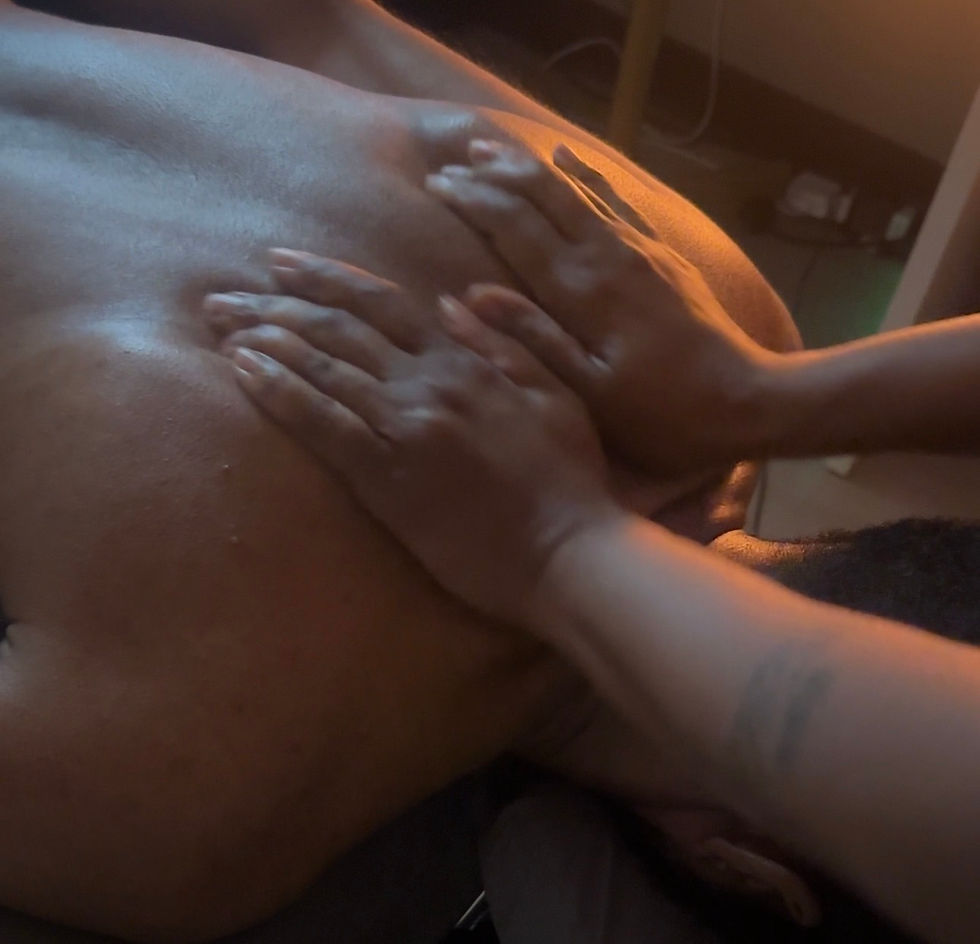
During a results-driven therapeutic session, your therapist uses localized, high-friction techniques to alter the physical state of the adhesion through three distinct physiological mechanisms.
1. Thixotropic Fluid Change (Creating Heat)
Deep connective tissue possesses a fascinating physical property called thixotropy—meaning it becomes more fluid and pliable when subjected to rhythmic friction and heat. By using slow, deep cross-fiber friction strokes across the site of the adhesion, the therapist physically warms the dense, hardened collagen, changing it from a stiff "gel" state into a malleable "liquid" state.
2. Manual Realignment (Remodeling the Fibers)
Once the adhesion is warm and pliable, the therapist applies targeted, directional shearing forces. By stretching and gliding precisely along the grain of the restricted muscle, therapeutic massage helps realign the chaotic, tangled web of scar tissue fibers into a neat, parallel structure that mimics healthy, elastic muscle.
3. Neovascularization (Bringing Back the Blood)
By mechanically loosening the dense, clamped fibers of the adhesion, therapeutic massage removes the physical pressure on local capillaries. This allows a fresh wave of oxygenated blood to flood back into the historic injury site, kickstarting the body's natural cellular cleanup crew to sweep away old metabolic debris and deeply nourish the tissue.
Part 4: What You Will Experience During and After
Because breaking up internal adhesions requires working on dense, chronically restricted tissue, the sensation can be described as a "good hurt"—a deep, localized pressure that feels like a satisfying release.
As the layers of muscle are successfully unglued, you will likely experience:
An Immediate Increase in Range of Motion: You will physically feel like you can turn your neck, lift your arm, or bend your hip further without hitting a hard wall.
Temporary Post-Session Soreness: Because old, stagnant tissue is being flooded with circulation for the first time in months, the area might feel a bit tender for 24 to 48 hours, similar to the day after a strenuous workout.
Break the Bind. Restore Your Range.
Stop letting old injuries dictating how you move today. If you have a stubborn, stiff zone that feels structurally glued shut, standard relaxation won't cut it. Let’s manually unstick those muscle layers so you can move freely again.



Comments